
Nitrous Oxide: A Comprehensive Guide to Its Uses and Effects
Share
Nitrous Oxide (N2O): Uses, Effects, and Safety for Culinary Use
Nitrous oxide (N2O) shows up in more places than most people expect: dental sedation, whipped cream dispensers, wine preservation systems, and even motorsports. The problem is that online explanations often mix clinical facts with unsafe misuse advice.
This guide focuses on what nitrous oxide is, how it works at a high level, where it’s legitimately used, and what “safe” looks like when you’re using food-grade N2O for culinary applications.
Last updated: 2026-04-15
Key takeaways (quick answers)
- Nitrous oxide (N2O) is a colorless gas used in medicine for sedation/analgesia and in food for aeration (like whipped cream) and rapid infusions.
- In healthcare, it’s typically delivered as a controlled mix with oxygen and is valued for quick onset and quick recovery ([NCBI Bookshelf — StatPearls](https://www.ncbi.nlm.nih.gov/books/NBK532922/)).
- For consumers, the biggest safety issue is misuse: the FDA advises people not to inhale nitrous oxide products sold in canisters, tanks, or chargers ([FDA](https://www.fda.gov/food/alerts-advisories-safety-information/fda-advises-consumers-not-inhale-nitrous-oxide-products)).
- For kitchen use, treat N2O as pressurized gas equipment: use the right regulator/dispenser, keep everything clean, and store chargers/tanks correctly.
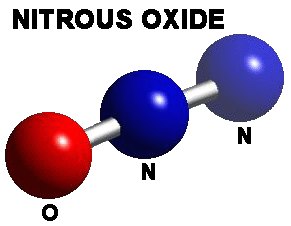
What is nitrous oxide (N2O)?
Nitrous oxide is an odorless, colorless gas. It is not flammable, but it can support combustion similar to oxygen ([NCBI Bookshelf — StatPearls](https://www.ncbi.nlm.nih.gov/books/NBK532922/)).
You’ll also see it called “laughing gas” in medical contexts because it can cause a brief sense of calm or euphoria under supervised administration ([NCBI Bookshelf — StatPearls](https://www.ncbi.nlm.nih.gov/books/NBK532922/)).
How does nitrous oxide work in the body (high level)?
N2O acts on the central nervous system. In clinical use, it’s known for fast onset and fast offset due in part to low blood solubility ([NCBI Bookshelf — StatPearls](https://www.ncbi.nlm.nih.gov/books/NBK532922/)).
It is a relatively weak anesthetic on its own (its minimum alveolar concentration is about 104–105%), so it’s typically used as an adjunct rather than a sole anesthetic ([NCBI Bookshelf — StatPearls](https://www.ncbi.nlm.nih.gov/books/NBK532922/)).
Common legitimate uses of nitrous oxide
1) Medical and dental sedation
In healthcare settings, nitrous oxide is used for sedation and analgesia, often as a mixture with oxygen. One common approach described in clinical overviews is a 50% N2O / 50% oxygen mix for analgesia in settings like obstetrics or emergency care ([NCBI Bookshelf — StatPearls](https://www.ncbi.nlm.nih.gov/books/NBK532922/)).
2) Culinary use: whipped cream, foams, and rapid infusions
In kitchens and bars, food-grade N2O is used as a propellant to aerate creams and create stable foams. It is also used for rapid infusion methods in closed containers designed for pressurized gas.
Practical example: If you’re making whipped cream for plated desserts, a dispenser charged with N2O can produce consistent texture service after service. The key variable is pressure control and cleanliness, not “more gas.”
3) Wine preservation
N2O is sometimes used in wine preservation setups as an inert-style protective gas layer to reduce oxygen exposure in opened bottles. If your system uses gas cartridges or a tank, filtration and clean gas delivery matter because you don’t want off-flavors or residues contacting the wine.
4) Automotive (context only)
Nitrous oxide is also used in motorsports to increase oxygen availability in an engine. This is a specialized use case with different equipment and safety standards from culinary systems.
Safety: what “safe use” means for consumers
FDA warning: do not inhale nitrous oxide products
The FDA advises consumers not to inhale or misuse nitrous oxide products sold in canisters, tanks, or chargers, noting that intentional inhalation can lead to serious adverse health events, including death ([FDA](https://www.fda.gov/food/alerts-advisories-safety-information/fda-advises-consumers-not-inhale-nitrous-oxide-products)).
Pressurized gas safety checklist (kitchen and bar)
- Use the right equipment. Use chargers/dispenser systems rated for N2O, or a tank system with a proper N2O regulator.
- Keep seals and threads clean. Grease, debris, or cross-threading is how you get leaks and damaged fittings.
- Store correctly. Keep chargers/tanks away from heat sources and direct sun; follow the manufacturer’s storage guidance.
- Control pressure. If you use a tank, a regulator helps you dial in consistent pressure instead of guessing.
Food-grade vs medical nitrous oxide (what actually matters)
People often compare “medical-grade” and “food-grade” nitrous oxide as if one is always safe and the other isn’t. In reality, what matters is whether the gas and packaging meet the standards for the intended use, and whether you’re using the correct equipment for that use.
If you’re using N2O for food, buy food-grade N2O from a reputable supplier and use equipment intended for culinary applications.
Where filtration fits (and when it matters)
Even when a product is labeled food-grade, trace residues or particulates can still enter a system through handling, tank fittings, or downstream equipment. That’s why some users add inline filtration for culinary gas delivery—especially for higher-volume tank setups.
| Setup | Typical use case | Where filtration helps most |
|---|---|---|
| 8g chargers + dispenser | Home whipped cream and small-batch foams | Consistency and protecting the dispenser valve from debris |
| Large tank + regulator | High-volume service, rapid infusions, wine preservation systems | Cleaner delivery across many uses; minimizing residue and off-flavors |
FAQ
Is nitrous oxide the same as “laughing gas”?
Yes. “Laughing gas” is a common nickname for nitrous oxide (N2O) in medical and dental settings. Under supervised use, it can cause relaxation and mild euphoria, which is why the nickname stuck, but the same gas is also used as a food propellant in culinary tools ([NCBI Bookshelf — StatPearls](https://www.ncbi.nlm.nih.gov/books/NBK532922/)).
How quickly does nitrous oxide take effect?
In clinical overviews, nitrous oxide is described as having rapid onset and rapid offset, in part because it has low blood solubility. That’s one reason it’s used for short procedures where providers want effects that can be adjusted quickly ([NCBI Bookshelf — StatPearls](https://www.ncbi.nlm.nih.gov/books/NBK532922/)).
Is it safe to inhale nitrous oxide from tanks or chargers?
No. The FDA advises consumers not to inhale or recreationally use nitrous oxide products from any size canisters, tanks, or chargers, and warns that intentional inhalation can lead to serious adverse health events, including death ([FDA](https://www.fda.gov/food/alerts-advisories-safety-information/fda-advises-consumers-not-inhale-nitrous-oxide-products)).
What is nitrous oxide used for in the kitchen?
In culinary applications, food-grade nitrous oxide is used as a propellant in whipped cream dispensers and similar tools to create stable foam textures. It’s also used for rapid infusions in containers designed for pressurized gas, where N2O helps drive gas into liquid quickly before it’s released.
Can nitrous oxide be used as the only anesthetic?
Clinical references describe nitrous oxide as a weak anesthetic on its own: reaching one MAC would require about 104–105% concentration, which isn’t feasible in practice with adequate oxygen delivery. As a result, it’s typically combined with other anesthetics rather than used alone ([NCBI Bookshelf — StatPearls](https://www.ncbi.nlm.nih.gov/books/NBK532922/)).
Safety disclaimer: Nitrous oxide should only be used as directed for culinary purposes. Misuse of N2O products is dangerous and illegal.
For culinary setups that use a tank, consider using a regulator for consistent pressure and an inline filter designed for food-grade N2O delivery.
Nitrous oxide should only be used as directed for culinary purposes. Misuse of N2O products is dangerous and illegal.